
What Buying Beside a Camden County Field Really Means

In this post
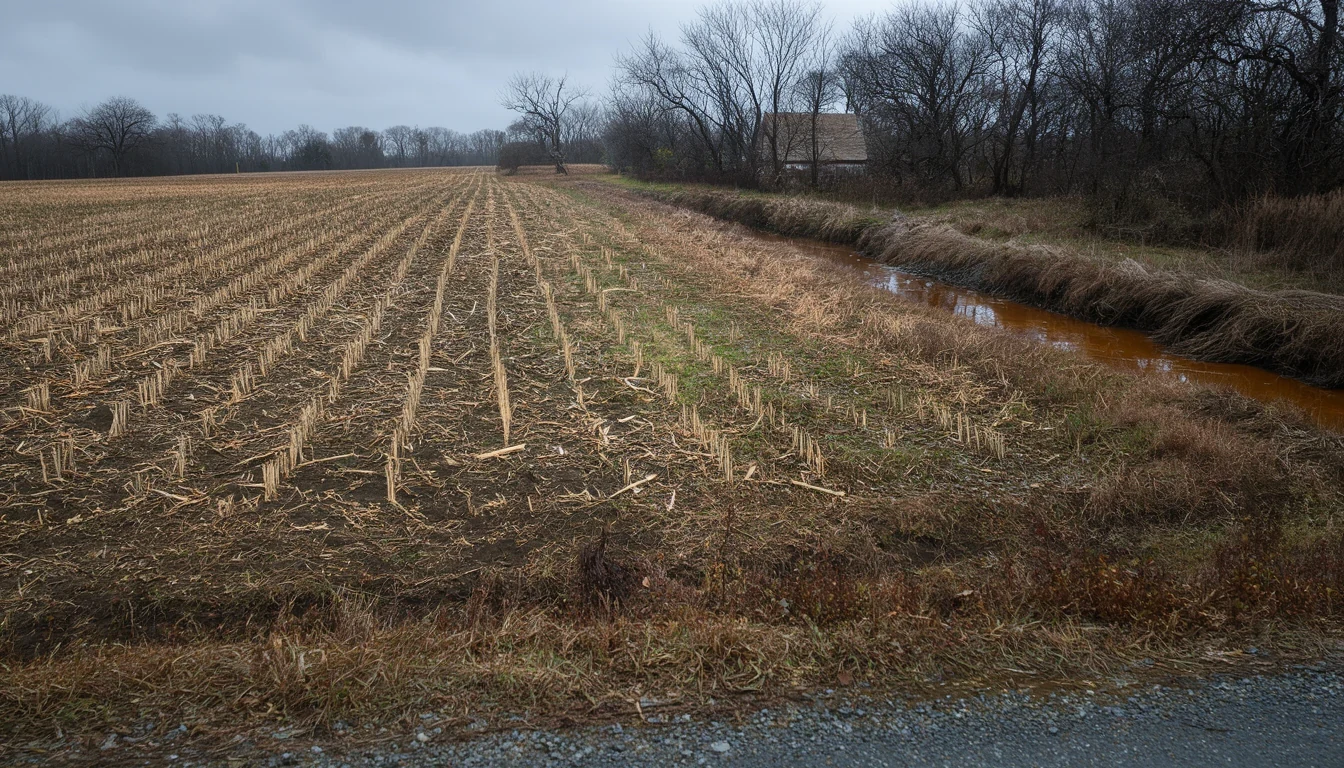
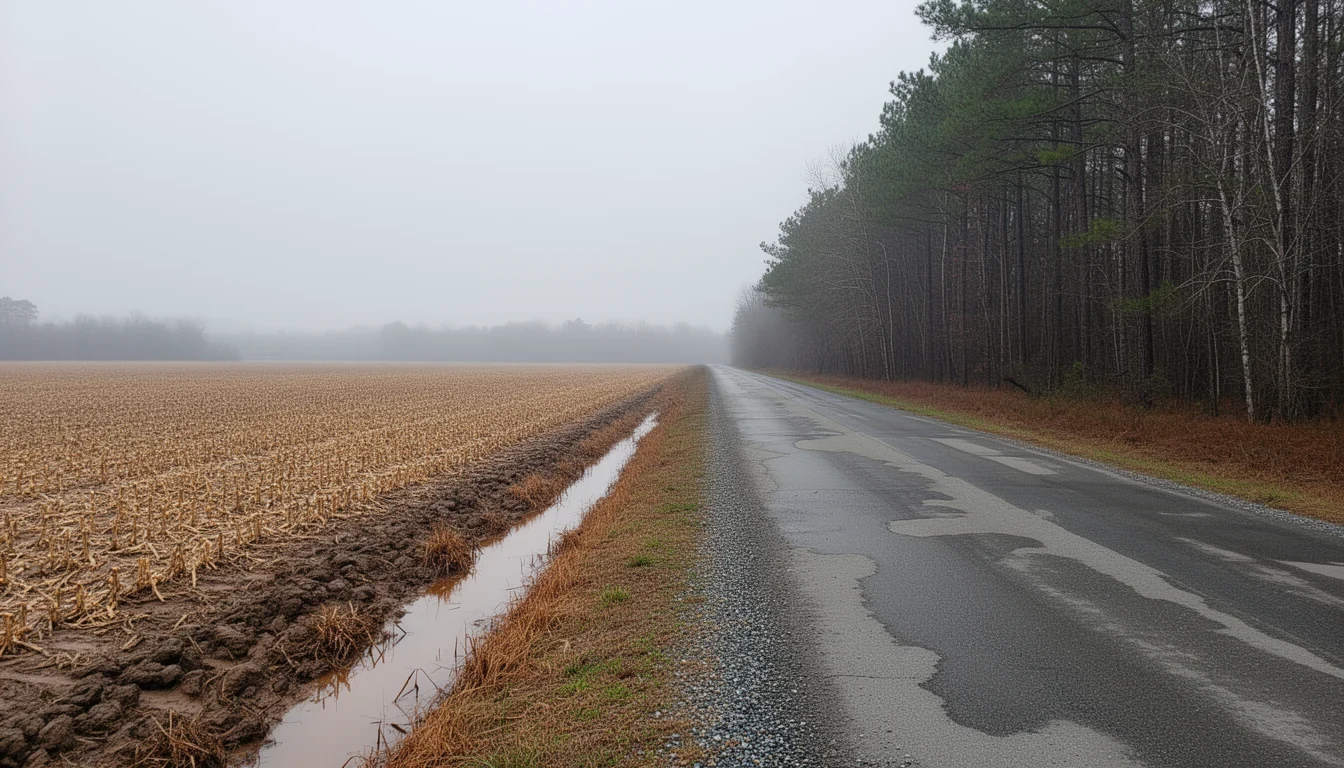
The ditch along NC 343 holds water all through November. The soybean ground behind it is stubble. The wheat somebody planted in October shows as a faint green comb in the gray. Cold mud smell. Diesel. A tractor working a field road a quarter mile off.
That field is not scenery. It has an owner and a farmer. It also carries a set of legal protections you have probably never read. If the house you like backs up to it, you are buying into all three.
The farming is bigger than the drive-by suggests
The 2022 Census of Agriculture counted 76 farms in Camden County holding 54,621 acres, which works out to more than a third of the county’s land across its 241 square miles. The average farm is 719 acres. Sixteen of those farms run 1,000 acres or more.
Those operations sold $64.6 million of product in 2022, up 62 percent from 2017. Grains, oilseeds and dry beans accounted for $44.7 million of it, a category where the census ranks the county fourteenth in the state. Soybeans took 27,200 acres, corn for grain 19,707, wheat 6,574.
Here is the number I did not expect. Irrigated acreage in the county came back at six acres. Six. Almost every acre of cropland here is dryland, watered by whatever falls.
That tells you something practical about living beside it. The conflict is not a pivot rig pulling the water table down at two in the morning. It is the spray rig and the dust behind it, on somebody else’s schedule.
Half a mile, and one year
North Carolina’s right-to-farm statute is short and blunt. Under G.S. 106-701, no nuisance action can be filed against an agricultural or forestry operation unless three things are all true. You legally possess the affected property. That property sits within one half mile of the source. And you file within one year of the operation’s establishment, or within one year of it undergoing a fundamental change.
Then read what the statute refuses to call a fundamental change. A change in ownership. A change in size. An interruption of farming up to three years. Joining a government farm program. New technology. A different crop. None of those reset your clock.
So the tractor noise and the sprayer are closer to a fixed condition of the address than to a claim you can bring. Note where the statute stops, though. Subsection (c) keeps your right to recover damages for pollution of a stream or for water overflowing your land. Drainage is the argument you can still have.
Zoning ends at the fence line
Camden County has a Unified Development Ordinance, and it does not reach a working farm. G.S. 160D-903 says county zoning may not affect property used for bona fide farm purposes, though it still applies when farm property gets used for something that is not farming.
The statute also lists what counts as proof a place is a farm: a farm sales tax exemption certificate, a tax listing showing eligibility for present-use value, a Schedule F from the owner’s federal return, or a forest management plan.
What that means at the boundary. The tract next door can put up barns, a residence for the operator, and buildings for agritourism without the site plan review you might expect. The house you buy is fully regulated. The farm beside it mostly is not.
The tax bill sitting under the field
A lot of this land is taxed at its farming use rather than its market value, under G.S. 105-277.3. The difference is deferred, and the deferred amount rides as a lien on the property.
It comes due when the land stops qualifying. The county bills the current year plus the three before it, with interest. If you buy a farm in the program, the classification does not carry over on its own: a new owner has to file a new application and accept liability for the deferred taxes. That means the deferred number can land on your side of the closing table rather than the seller’s.
The eligibility thresholds matter before you tour anything. Agricultural land needs a tract of at least ten acres in production and an average of $1,000 a year in gross farm income over the three years before January 1. Forestland needs twenty acres. Split a homesite off a tract that size and you can disqualify that piece and pull its share of the rollback into the open.
Camden’s county rate is 71 cents per $100 of value plus a penny for fire. The gap between use value and market value is what the deferred figure measures, and the tax office can put it in writing.
Spray days, ditches, and who answers the phone
Pesticide application on a farm is legal, and drift complaints have a route. The N.C. Department of Agriculture’s Structural Pest Control and Pesticides Division takes misuse and exposure complaints by webform or mail and runs them through its enforcement response unit.
Before it reaches that point, do the cheap things. Walk the boundary and work out which way the summer wind crosses that line. Meet the operator. Ask what gets put out and when. Farmers in a county this size answer that question more often than you would guess.
Water is the other practical issue, because drainage here is all ditches. Some are maintained by the county. Some belong to whoever owns the ground on each side, and the outfall may cross three other deeds before it reaches a canal or a creek. Find where yours goes before a wet winter finds it for you. That is a question for the county and for a surveyor, not for a listing agent.
The year the pines come down
Only 472 acres of the county’s farmland is classified as woodland, so the woods you see from a back porch are mostly not part of a farm. They are somebody’s timber, and timber gets cut.
The statute covers forestry operations as well as farming, so the same half-mile and one-year logic applies to a harvest next door. It will be legal. It will be loud for a few weeks, and the ground will look like a wound for two growing seasons before the replanted stand closes over. A written contract and a registered forester are the landowner’s protection, not yours. Your protection is knowing whether the tract is about to be cut.
What I would do before the offer
Five things, in order.
Pull the parcel record from the tax office and ask whether it sits in present-use value, then request the rollback estimate in writing.
Ask county planning whether the tract is in a voluntary agricultural district, and whether the county has one at all.
Find the ditch that drains your side and trace it to its outfall.
Drive the road on a weekday morning in June, not a Saturday in February, when the sprayer and the planter are actually working.
Then knock on the neighbor’s door and ask what the field in front of you gets planted to.
The land was farmed before the house went up, and it will be farmed after you sell it. Knowing the terms of that arrangement is the difference between buying a place in the country and buying a fight with it.
Melinda Cabot is a broker with Horizon Realty Group in northeastern North Carolina. Acreage, sales and irrigation figures come from the 2022 Census of Agriculture county profile; statute text is quoted from the North Carolina General Statutes as published by the General Assembly. Tax classifications and rollback amounts are parcel-specific and should be confirmed with the Camden County Tax Office before closing.
Keep reading
Camden Is NC's Only City-County. Six Things to Check.
Camden County is North Carolina's only consolidated city-county. What that means for your tax bill, your water, your fire rating, and your EMS.

Waterfront in Camden County: Four Waters, Four Purchases
Camden County has four different waters: the Pasquotank, the North River, the Albemarle, and the Dismal Swamp Canal. What waterfront means on each.
The 1% Tax Most Camden Buyers Never See Coming
Camden is one of seven North Carolina counties levying a 1% local land transfer tax. What it costs, who pays it, and where it hides in a contract.